Saturday, 11 July 2009

Mortsafes

Mortsafes were a uniquely Scottish invention. They were invented to deter the rampant bodysnatching or graverobbing that was going on in the early 18th and 19th centuries.

The bodysnatching started as a means of procuring corpses for medical students to use in their studies of anatomy and physiology. This was a particularly heinous crime during a time of deep religious sentiment, when death was a common thing and people believed they absolutely needed their physical body intact in order to gain entrance to heaven.

The Mortsafe was invented in 1816. These huge, expensive iron cages were placed over the graves of individuals by family and friends intent on protecting their loved one's body from the horrible 'resurrectionists'.

Many of these graveyards were also equipped with watch towers, where members of the church would take turns keeping watch at night for any suspicious figures lurking in the dark near a freshly buried corpse.

Unfortunately during World War I many of these Mortsafes were destroyed by town members salvaging any scrap metal they could to assist in the war efforts. I have had the luck of coming across several wonderful examples of Mortsafes, some of which resemble bird cages, the doors now rotted off the hinges and laying in the tomb itself.

All four pictures were taken by myself on visits to various old graveyards around the country.

Friday, 10 July 2009

Lily Dale


I've just finished reading the book "Lily Dale: the true story of the town that talks to the dead". The reason I had decided to read it was because Lily Dale is a familiar name to me.

My Great-Grandmothers, Grandmother, Mother and Aunts have all been to Lily Dale multiple times. I had heard stories of what spiritualists have told them and which were the preferred and trusted mediums of the town; a reading with one of the best can cost up to $200 per hour. I myself have never been inclined to have a reading and I don't ever foresee myself wanting one, but I do find it all intensely interesting.

The town is located approximately 1 hour south of Buffalo, New York off of the Interstate 90. Founded in 1879, Lily Dale is the oldest spiritualist community in the United States.

In the early 20th century spiritualism became very popular, almost fashionable in America. Many famous people made their way to Lily Dale, including Harry Houdini and Mae West- who was a regular client of a renowned medium of the time named Jack Kelly. Kelly once drove from Buffalo to Lily Dale blind folded, or so it is said. Also, many modern mediums including John Edward and James Van Praagh have visited.

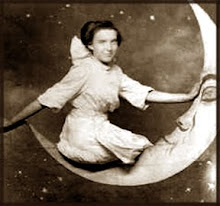
Lily Dale is still going today, however it is mostly a summer community (you must be a spiritualist in order to own a home in the village). In 1949 the town outlawed physical mediumship, which is defined by the use of: raps, loud noises, material objects, spirit photographs (see above), levitation, dimly lit rooms, spirit cabnets and spirit trumpets.

You can visit the official Lily Dale website at http://www.lilydaleassembly.com/

Wednesday, 8 July 2009

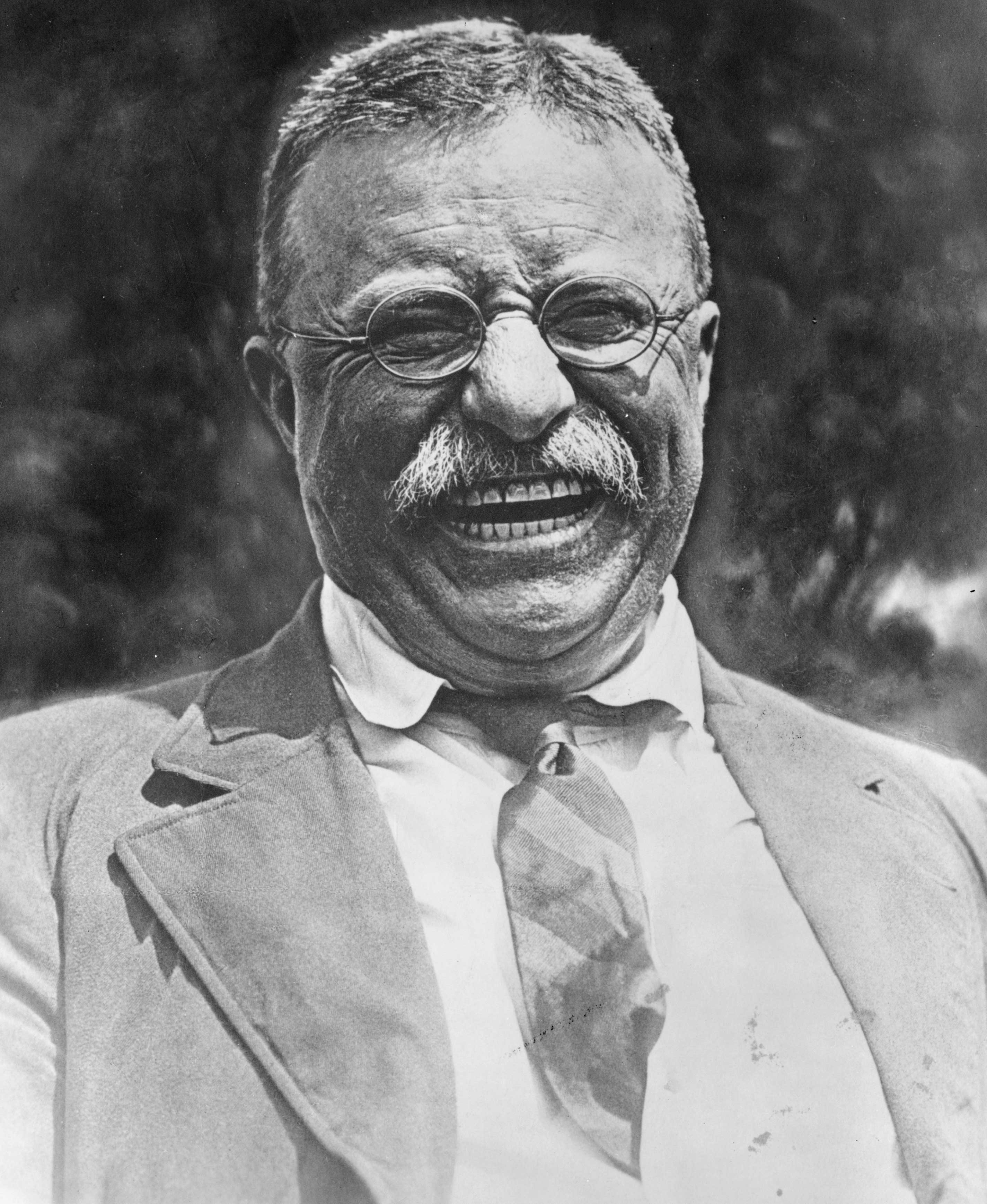
Theodore Roosevelt.

Theodore Roosevelt is my personal hero. I think he is one of the greatest Americans for all time. A lot of times when I'm in certain situations I like to think "What would T.R. do?" I would like to share some interesting facts about President Tiddy (he disliked being called "Teddy").


- He was shot in the chest during an assassination attempt in Milwaukee, WI. The bullet became lodged in his chest wall. He continued to go ahead and give his speech, while blood poured out of his chest.
- He was the first American as well as President to win the Nobel Peace Prize.
- He coined the Maxwell House slogan "Good to the last drop" when he sampled their coffee in Nashville, Tennessee.
- His favorite breakfast was hard boiled eggs with waffles.
- On his presidential inauguration in 1905 he wore a gold mourning ring with a lock of Abraham Lincoln's hair that John Hay had given him.
- He was the first president to ride in an airplane, own a car and have a telephone.
- He was the first to officially call the Presidential residence 'The White House' before T.R. it was known as 'The Executive Mansion'.
- He is the youngest President of the United States, he took the oath at 42.
- He had a tattoo of his family crest.
- And of course, the "Teddy Bear" was named after him.


He was larger than life and a truly inspirational figure. When he died the Vice President to Woodrow Wilson, Thomas R. Marshall, said- "Death had to take Roosevelt sleeping, for if he had been awake, there would have been a fight".

http://www.theodoreroosevelt.org

Monday, 6 July 2009

Victorian Name Brooch

I just bought an old Victorian name brooch! I've had my eye out for one for a while now, lo and behold, I found one with my name on it.

The Victorians and Edwardians loved these brooches. It's original use was to label the staff of large estates. These pins went on to become popularly used as sweetheart brooches and tokens of love. They became machine manufactured, thus making them affordable and rather common.

The sentiment and personalization is what makes them so charming. Most of the name brooches I have seen have been made in silver or Whitby jet, always adorned with beautiful flourishing engravings, flowers, hearts, clovers and so on.

The names on the brooches are very 'of the time', lucky for me 'Carrie' was a rather popular name in the last half of the 19th century. Most of the names I have come across are 'Agnes', 'Nellie', 'Polly', 'Minnie', 'Flora' ect.

The picture above I used from Wee Birdy London. The other picture is of my own recently purchased find.

Sunday, 5 July 2009

Motorcycle Hearses

The other day my husband and I were walking past the Funeral parlor right by our apartment building when we noticed in the window they have a small model of a 'motorcycle sidecar hearse'. I had never seen anything like this before, but it didn't seem unbelievable to me. When we got home I had a look at the website that was advertised along side the model.

It seems the sidecar hearse is by no means a new concept. It actually dates back to 1967, when a Londoner who was a motorcyclist drowned, and his friends and family wanted to give him an 'appropriate' funeral. It has been done on a few other occasions since 1967.

The man who is now popularizing the purpose built side car hearse is Rev. Paul Sinclair a.k.a. the 'Faster Pastor'. Sinclair believes that "people's life styles should be reflected in in their funerals". Sinclair released the first literal motorcycle hearse in 2002. Since then his fleet has grown and he's working on expanding even further. Rev. Sinclair also reassures us that with casket the motorcycle hearse will not exceed speeds of 70 mph.

If you would like to take a look at the official website it is here at www.motorcyclefunerals.com

St. Andrew's Cathedral

St. Andrew's was founded in 1158, when the previous church St. Rule's became too small to accommodate the bishops there. The work on the church took close to 150 years to complete. It was consecrated in 1318 in the presence of Robert the Bruce.

The Scottish Reformation (1559-1560) ultimately brought an end to the cathedral. In June of 1559 John Knox (who is now buried under a parking meter in Edinburgh) preached a sermon at St. Andrew's parish church that worked the congregation into such a frenzy, that they went to the cathedral and destroyed anything they thought associated with the "popery". The friars in turn were all expelled from the priory.

Stone coffins, now exposed, in which the most important officers of the priory might have been buried.

St. Andrew's Flickr Album

Saturday, 4 July 2009

Bothwell Parish Church (St. Bride's Collegiate Church)

Bothwell Parish Church is located in South Lanarkshire, Scotland. It is touted as "The Oldest Collegiate Church in Scotland". Archibald Douglas (also known as 'Black Archibald') the third Earl of Douglas originally founded the church in 1398. However, during reconstruction in the 1930's, stone fragments dating from the 13th c. were found.

St. Bride's in fact occupies the site of a church that stood there in the 6th c. Archibald's body was laid to rest in St. Bride's: unfortunately, his tomb no longer exists.

It is an absolutely beautiful church. The interior is incredible and the stained glass work is absolutely stunning. The back of the church where the choir sits is the oldest part. The graveyard is equally noteworthy, with unique enclosures that almost resemble bird cages to save the interred from the feared body-snatchers that terrorized Scotland in the 18th and 19th centuries. See more pictures here.